Leaving Mumbai

I left Mumbai on November 11, 2009 on the overnight train to Udaipur. The house boy, who spoke no English, took me via taxi to the station, as my host was working, and made sure I got safely on the coach.

For some reason, the ride across Mumbai made a greater visual impression on me than many other aspects of my stay there. Tropical Cyclone Phyan, for which the warning was posted about an hour before my departure from Bombay, caused localized flooding and traffic jams. It was the coolest weather since my arrival in India.

Haji Ali Mosque
Children in Flooded Street

Traffic Jam
Street Scene

Next stop...Udaipur Overview

Awas Beach Trip

One of my adventures during my stay in Mumbai was a day trip to my friend's family beach house in Awas. We took an early morning ferry from the Gateway of India heading south across a spit of the Arabian Sea. The boat was crowded with day trippers including families, foreign tourists, and a mens' soccer team. There was a lot of picnicking, card playing, and some even had musical instruments for everyone to sing along. 

En route, the variety of tiny wooden fishing boats bobbing on the water next to huge cargo ships was mind boggling. 

Eventually we arrived at the Mandwa Jetty pier and procured a very old auto rikshaw to take us to Awas village. 

The family home sits in a huge tropical garden overflowing with vines and a variety of both wild and cultivated plants tended by an elderly caretaker and his wife who live on the property.

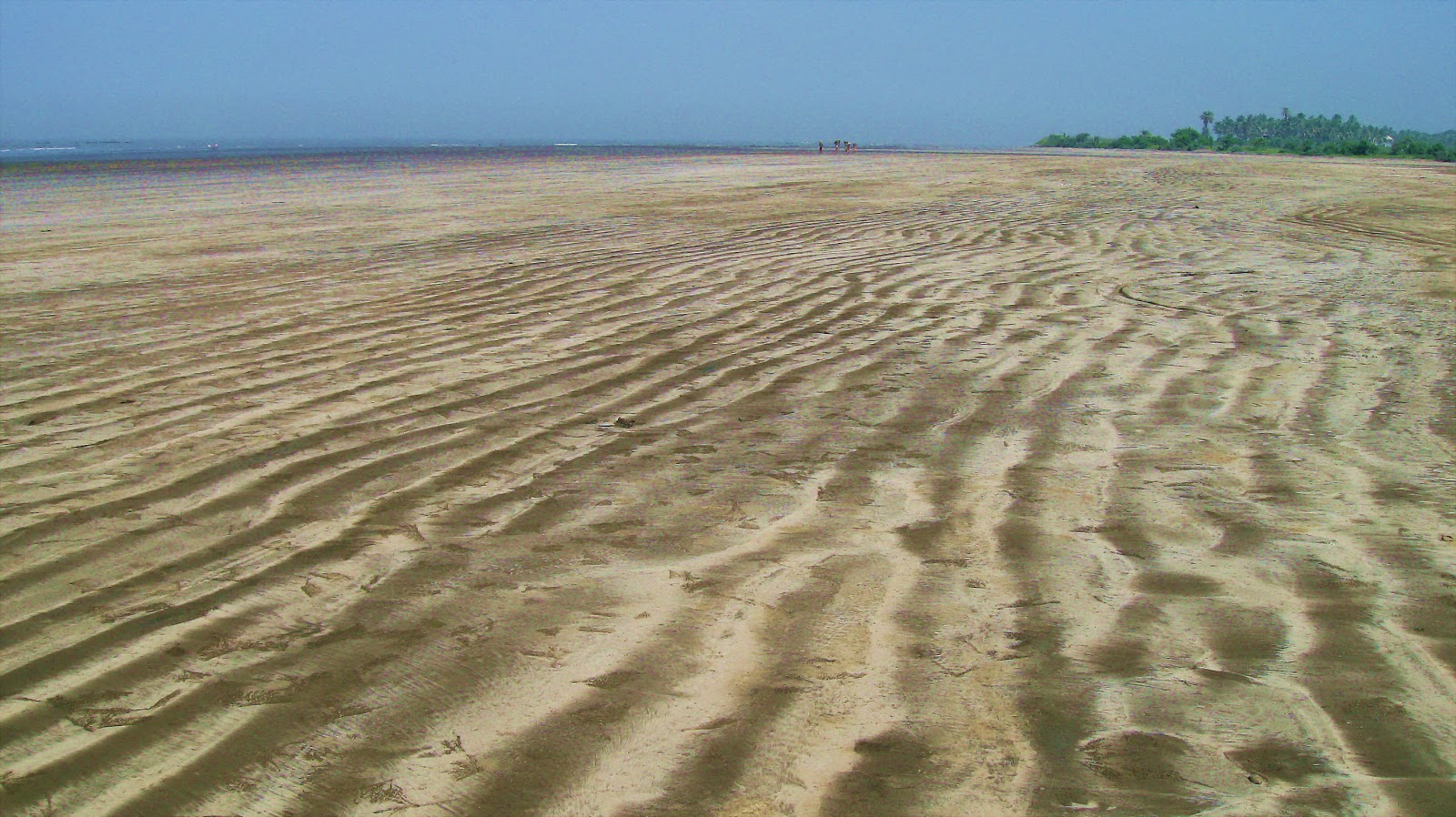
We walked through the village to the wide beach, which my friend told me is one of the cleanest in the entire region due to the current moving rubbish away from shore. Many beaches around Mumbai are not safe for swimming due to severe pollution.
Cargo Ships on Arabian Sea


Small Fishing Boat on Arabian Sea


Schoolgirls in Awas Village
Vines on the Beach House
Sandy Expanse at Awas Beach
Family Dog with Bindi on Forehead

 Although it was very hot and humid the day of our visit (as most of the year is), I have fond memories of the day.

Mumbai...A Look Back

The Living Room of My Safe Have in Mumbai, my Friend's Family Apartment
I have decided to take a step back and review, in words and images, my days in India, from my arrival in October 2009 to my (thus far) last departure in October 2011. With a tentative return scheduled for early 2013, this seems like a good time to review my journey thus far, and to share a bit of what India means to me. My intent is to present a set of images from each place I visited, along with a few words on why they were so meaningful to me.

I arrived in Mumbai in late October 2009, totally unprepared for the "organized chaos" of India. For those more interested in words, and my state of mind at the time, I blogged the trip at Sacred Sojourns, starting with the post  "Thus Far on My Journey".
Curious Local Youth at Chai Walla (Tea Vendor)...People stare at strangers quite openly in India.
Taj Hotel and Gateway of India

Boats on Arabian Sea

Kalba Devi Bazaar District was over-crowded, a maze of noise and  activity, and an assault on all the senses

Colorful Salwar and Fabric Shops...India is a riot of color!


Where Does the Time Go?

Here it is late August already. I am still thinking, or re-thinking, the direction I want to take with this blog.
One thing I know: I want to share my photography.

What I do not know:
Should I do a single image post each week from all of my past travels?
Should I stick to a theme of only India & Tibetan/Buddhism related images, where my interest and passion lies?
Or should I stay with my present location (Chicago) and current work (cityscape and street)?
(Your input in comments is most definitely welcome!)

Meanwhile, I give you...a Buddha from Tamil Nadu...


This stone Buddha carving is located in the Alsdorf Gallery of Asian Art at the Art Institute of Chicago, where I work.

July Update

Since my last post, my life has been more than a little unsettled.
I moved into a new studio/apartment and unpacked all of my possessions and supplies for the first time since 2004.
I also started a new job at the Art Institute of Chicago museum gift shop, which occupies the majority of my time.
My days off have been dedicated to cleaning and stocking my new home, and resting up from work.

I feel like things are finally beginning to settle into place, but I have a long way to go on prioritizing all my creative pursuits to make the best use of what little free time I now have available.

Thanks for being patient with my lack of new image posts.
Let me leave you with a couple of contrasting shots from the Alsdorf Gallery of Asian Art at the Art Institute to tide you over til next time.
Carved Stone Deity from Himalayan Region
Japanese Floral Arrangement

It's in the Details

The details of landscape, both natural and man-made, have fascinated me for at least the past decade. Since relocating to Chicago, I've been actively pursuing unique perspectives on the urban landscape.
Nothing is off limits. I have been shooting subjects as simple, and unusual, as manhole covers, cracks in the sidewalk, pipes and wires, shadows, abstract patterns in the metalwork of bridges, and traffic signage.

This week I'll give you a sampler, a range of images you may find familiar or foreign, depending on your point of reference.
Rusted Structure

Rusted Metal Marker in Chicago River

Manhole Cover in Cracked Pavement

Chicago's 'L' Train Tracks


Everyday Exotic


When I started this blog, my intention was not only to showcase my photography, but to present the cultures where I had been living and working for the two years prior to this project. The focus was on the "exotic".

However, having since relocated to Chicago, I have had to revise my definition of exotic.
For me, discovering new neighborhoods could be considered an adventure.
And for someone born and raised in the Himalayas, wouldn't urban and suburban America be exotic?

So, without further ado, I'd like to present my first exotic Chicago photo essay, from my first trip to Chinatown earlier this year.
Signage in Chinatown

Glazed Ceramic Tile Peacock on Chinatown Shop Wall
Signage in Chicago Chinatown

Shop Signage in Chicago's Chinatown
Restaurant Worker Preparing Chinese BBQ Including Peking Duck


According to the wikipedia entry, Chicago's Chinatown began around 1869, when workers from the Trans-Continental railroad came looking to get away from anti-Chinese violence in the "Old West", making it the second oldest Chinese settlement in the USA.
Grandmother Walking with Young Girl in Chicago Chinatown

2012 "Mid" Year Update

It's fast approaching June 2012, the middle of the year, a good place to take stock and measure progress.


A lot of things have changed for me since I began this blog in December 2011. 
I no longer have immediate plans to return to Nepal and India, which brings me both relief and sorrow in ways I cannot possibly explain. 


Instead, I will be relocating to Chicago (!) in just a week from tomorrow. This has meant a lot of upheaval in my personal as well as professional pursuits/goals.


I am re-assessing plans for my next self-published photography books and hopefully will be ready to move on with that project before the end of 2012.


I would like to have my first public photography exhibit (coffeehouse or gallery is my hope) before the end of 2012, as well.


I am hoping the vibrant arts scene in Chicago will support me in ways that have previously seemed to be out of reach. Not only financially, but in finding a creative community within which to network and grow.


The first of my Chicago mini photo essays "should" be ready to post prior to the end of the first week of June.


Shifting Focus

To better reflect my current life back in the US, this blog will be shifting gears somewhat. In the future, photo essays and posts will not be limited to my past adventures in Himalayan destinations or cultures.


I am preparing to relocate to Chicago at the start of June 2012. It's a very exciting and somewhat frightening time for me, but I look forward to a wealth of new images to share with you.


Watch for more urban architectural shots, cityscapes and street photography as I get to know my new home. Chicago has a rich history, and is home to a vibrant blend of cultures. I look forward to exploring its Chinatown, Indian community, and other ethnic areas, amongst more "touristy" destinations. 


I will try to feature a blast from the past piece from my travels in India and Nepal on a semi-regular basis, for those who prefer my work in that field.


Thank you to everyone who has visited thus far. I look forward to building a broader audience and of course continue to encourage your comments/feedback.


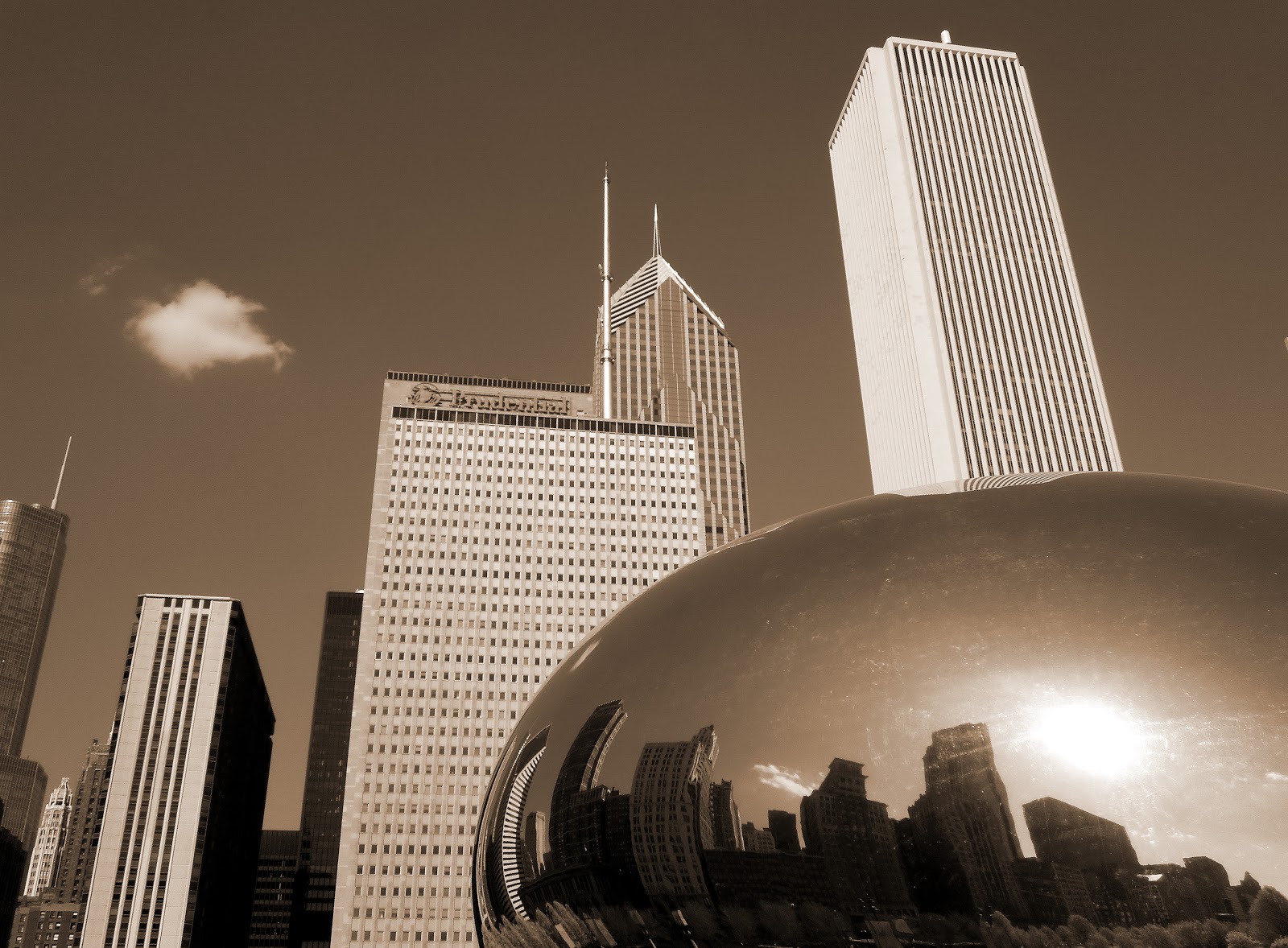
Downtown Chicago Reflected in "The Bean" (Cloud Gate), Sepia Tone, 2012


Don't forget! You can view and purchase all my work from various destinations both exotic and domestic by following the links from my Galleries page.


Rajasthan: Wet and Dry no longer available

(this app is no longer available)

Greetings from sunny central Florida.
It's with great pleasure that I announce the arrival of my long awaited FREE iTunes digital photography app, Rajasthan: Wet and Dry.

Rajasthan: Wet and Dry features 34 color and black and white images shot on my first visit to India in late autumn 2009. These scenes showcase some of the fabulous ways water and the desert climate has figured into the life of Rajasthan since ancient times. It moves us across the landscape, through history and through the various cultures which have shaped the region.

Here's a teaser from the app:

Rooftop Geranium

Despite its broken container & the high levels of local pollution, this Red Geranium seems to flourish in Boudhanath, Kathmandu
Triumph in the face of adversity.

Phulbari Street, Boudha, Kathmandu

Didis (Sisters) at a Phulbari Street Shop

In the Boudha neighborhood of Kathmandu, just outside the kora area around the Great Stupa which is the center of life, lies Phulbari Street. Like most main streets in the region, it is lined with shops catering to all the aspects of daily life, from groceries to clothing to religious needs. The locals often congregate outside friends' shops, whiling away the hours.
Nepali Men Resting in Shade 
Life flows at a far different pace in Nepal than in the western world, especially in traditional areas such as Boudha. My impression was that most of life takes place in the street or in small cafes.
Tibetan Girl Outside Phulbari Street Shop
There is no rush, in Phulbari Street. Just the timeless rhythms of commerce and killing time.

Swayambunath, Kathmandu, Nepal


Across the Himalayas, in the Kathmandu Valley, Mahayana Buddhists and Hindus often worship at sites which contain temples from both religions. One of these sites is Swayambhunath, on the eastern side of Kathmandu.
Devotees at Swayambunath

And, of course, Nepali natives also come to these sites as tourists, not solely as devotees.
Pyar=Love: A Nepali Couple Share a Moment at Swayambunath

Solo

Scrawled on the Wall of a "Downtown" McleodGanj Construction Site
My belated Valentine's Day post...
It seems Cupid was running around northern India, shooting his arrows...and, apparently, missing the mark (at least that was MY interpretation).

Meanwhile, at the opposite end of town, an Indian post box seems to wait for good news.


McleodGanj Area Monasteries

Zilnon KagyeLing Nyingma Monastery with Dhauladhar Range Behind


Tibetans, as most Mahayana Buddhists, include a great deal of ritual worship in their daily life. The monastery is traditionally the center of their community and spiritual life. Many of the ornate hand crafted details in the architecture of these buildings have spiritual significance.


There are numerous Tibetan Buddhist monasteries on the hillsides encircling McleodGanj. 


Zilnon Kagyeling monastery (pictured above), in the Nyingma School, is located above town against the backdrop of the Dhauladhar range of the Himalayas, and among the most easily photographed.


Namgyal Monastery, the seat of His Holiness Dalai Lama, is a Gelugpa Monastery and part of a spread out temple complex in the town of McleodGanj. There are other smaller monasteries, including Tsangpa, located in this temple complex, as well.
Stupa on Kora Behind Namgyal Monastery Compex
Gyuto Tantric Monastery and College, situated a few miles below Lower Dharamsala in the village of Sidhbari, is the temporary residence in exile of His Holiness the Karmapa (whose traditional seat is the disputed Rumtek Monastery outside Gangtok, Sikkim).


Nechung Monastery is located at the base of the Tibetan Parliament in Exile and Library of Tibetan Works and Archives, roughly midway between McleodGanj and Lower Dharamsala. Nechung is the seat of The Nechung State Oracle, also known as Kuten la.
Snow Lion Outside Temple Room of Nechung Monastery, with Dhauladhars in Background
Tse Choekling Gelugpa Monastery is situated in a valley at the base of a hill below McleodGanj, accessible by a long flight of stairs from the alley behind Om Hotel.
Tse Choekling Monastery Viewed from Stairs to McleodGanj


I look forward to your feedback!
All images copyright Tammy Winand/Everyday Exile Project

Welcoming His Holiness Dalai Lama

Tibetan Residents of Mcleod Ganj, HP, India Line the Street Awaiting Return of HH Dalai Lama in October  2010


While he has now given up his role as the political head of the Tibetan people, the Dalai Lama 
continues to  travel internationally several times annually to give Buddhist teachings in addition to secular speeches on ethics and mind science.


Tibetans mark his return from each of these journeys with a show of devotion. They consider HH Dalai Lama to be a manifestation of the Buddhist compassion deity Chenrezig, and offer prayers, khata (prayer scarves), incense, and many other traditional emblems.

Tibetan Women in Traditional Dress Offer Khata Prayer Scarves as a Sign of Devotion While Awaiting Return of HH Dalai Lama to His Exile home in McleodGanj, HP, India


The community always knows the date, even the time almost down to the minute, when His Holiness will return back to his temple and residence complex. They begin to turn out that morning, often 4-6 hours ahead of him, to await the auspicious moment. Tibetans, along with long term expats and Buddhist students from around the world, and of course lucky tourists, line the streets along his 
return route and the entrance to his temple and residence complex and make offerings as they wait.
A Tibetan Child Plays Beside Older Family Members Offering Incense While Awaiting the Return of HH Dalai Lama to McleodGanj in June 2011
It is such a joy to hear the police sirens in advance of His Holiness' "motorcade" and know that he has arrived back again safely. The atmosphere of the entire town is noticeably different when "their god" (as he is sometimes referred to by local Indian media) is in residence. 

*PLEASE NOTE: 
HH Dalai Lama is not actually considered to be a god. It is complicated, but the most simple As mentioned above, he is viewed in Tibetan Buddhism as an emanation, or manifestation, of the bodhisattva of compassion, known in Tibetan as Chenrezig (Sanskrit Avalokiteshvara). In his own words, he is nothing more than a "simple monk".
Special Banners Decorate the Tibetan Exile Capital of McleodGanj When He Returns from a State Visit
In This Instance, He Had Visited US President Barack Obama in February 2010


 All Images Copyright Tammy Winand and the Everyday Exile Project and may not be used in any way without her express written permission.

All images are available as prints and posters or upon request. 


Candle in the Dark

Buddhist Monk Lighting Butter Lamps in Phulbari Street, Boudha, Nepal
During May 2011, the Buddhist communities of greater Kathmandu, Nepal celebrated Vesak, the holy days of the Buddha Sakyamuni's birth, enlightenment, and attainment of Nirvana upon his physical death.

I came across this scene on my way back to my guesthouse near the Great Stupa pilgrimage site in Boudhanath one evening close to Vesak. Lighting butter lamps is one way Buddhists make offerings to show their devotion.

The women selling the butter lamps (for 5 Nepal rupees each) are from the Tamang ethnic group.